The SEO tool wall · prices read 24 Sept 2026
Every SEO tool is built for one job. Start by naming yours.
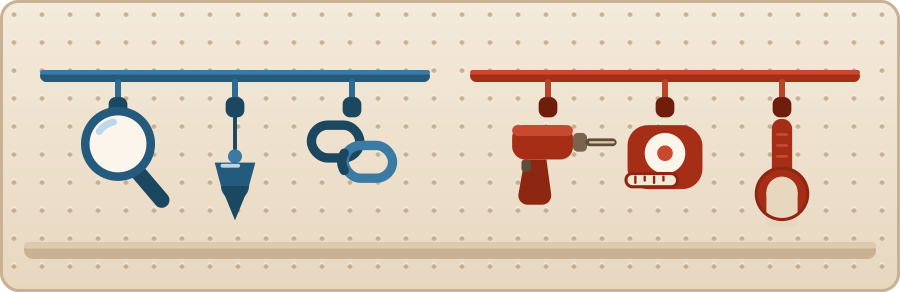
Searchbench sorts SEO software by the work it does rather than by brand, says plainly which jobs Google and Microsoft already do for nothing, and prints what every paid tool publishes as its price with the day that price was read.
The blue rail
Questions Google and Microsoft answer for nothing
- Is this page even indexed?
- Where am I ranking, roughly?
- Who links to me?
The red rail
Jobs where paid software earns its keep
- Crawl a whole site, not a sample
- Size a keyword list before writing
- Score a draft against what ranks
Why a wall of tools and not a top ten
A top-ten list of SEO tools compares a crawler with a keyword tool with a WordPress plugin, and then ranks them. Those three things do not do the same job, so the ranking cannot mean anything — which is why every such list quietly puts the same two suites at the top and lets the rest fight for position four.
Searchbench takes the other approach. Six jobs, named in plain language. For each one: what it is, which kind of software does it, whether something free already does it well, and what the paid options publish as their price. Then you buy the one tool for the one job you actually have.
What is on this site
The tool map is the main page: all six jobs on one table, with the free answer and the cheapest paid answer for each and the price the vendor prints. The free tools page takes the four genuinely free tools seriously — what each covers, and the exact point where it stops.
The workbench notes go one tool at a time: what a WordPress SEO plugin costs in year two, which of the six jobs an on-page tool is really doing, where the enterprise tier starts, and what a shop on Etsy or Shopify can and cannot change.
How the prices here work
Every figure on this site was read on the vendor's own page and carries the day it was read. Where a page opened on its annual panel, the monthly panel was clicked and read separately — several of these pages headline a yearly rate while the word "monthly" sits somewhere else entirely.
Where a vendor does not publish a number, this site writes that it does not publish it. There are no estimates here, no converted currencies, no figures carried over from someone else's article, and no test results, because nothing on this site has been tested.
Who pays for this
Some links here are partner links, written as /go/ and marked sponsored and nofollow. Several of the tools recommended most often across the site — Google Search Console, Bing Webmaster Tools, Google Keyword Planner, the free Screaming Frog crawler — have no such arrangement and pay nothing, and they still go first on the pages where they are the right answer. The full list of which is which names every partner and every refusal.
From the workbench
Every note →AI SEO tools: three different products wearing one label
"AI SEO tool" now covers writing assistants, assistant-visibility trackers and ordinary tools with a chat box bolted on. They are not substitutes for each other.
Enterprise SEO tools: what the tier actually buys
Almost every enterprise SEO tier hides behind a sales call. One vendor prints its price. Here is what the tier really changes, and when it is genuinely needed.
Etsy SEO tools, and why the usual SEO tools do not apply
Almost nothing on the standard SEO wall works on an Etsy shop. You do not own the domain, cannot verify the pages, and are ranking inside somebody else's search engine.
On-page SEO tools: what they measure, and what that is worth
An on-page tool reads the pages already ranking and tells you what your draft lacks. That is a real job — and a narrower one than the score it hands you suggests.
Rank Math review: the plugin that prices by person, not by site
Rank Math's paid tier covers unlimited personal websites at one price and prints its renewal figure next to the discounted one. Both of those are unusual.